

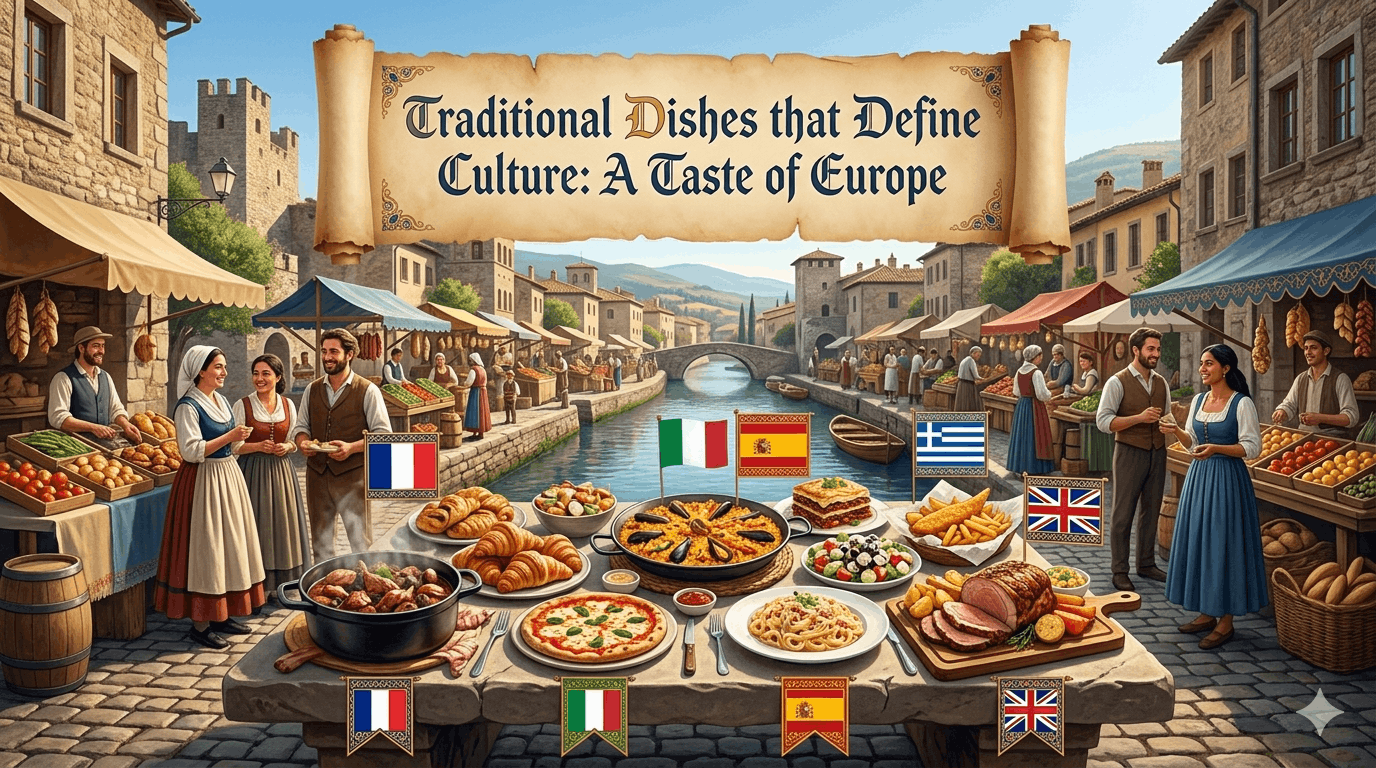
Food in Europe is not just about eating. It shows history, land, and long traditions. Every country has special dishes that tell stories about its people and how they live.
Some meals are simple and made at home, while others are rich and prepared for festivals. European food has many different flavours. In this section, we look at how traditional dishes show culture and identity.
France: Art and elegance on a plate
French food is known for its elegant style and careful cooking methods. In France, food is not only about taste. It is also about how it looks and how it feels to eat it.
A famous dish is Coq au Vin, where chicken is cooked slowly in wine with herbs. This slow cooking makes the taste rich and shows how patience is important in French cooking.
Another popular food is a croissant. It is light, buttery, and crispy, and people often eat it for breakfast. In France, meals are seen as special moments. People like to sit together, eat slowly, and enjoy every bite. This shows a lifestyle that cares more about quality than eating fast.
Italy: Simplicity with deep flavours
Italian food stands out for its simple ingredients and bold taste. It focuses on freshness and balance. One of the most iconic dishes is Pizza Margherita. It uses tomatoes, mozzarella, and basil, yet delivers a rich and satisfying flavour. This dish represents the idea that simple food can be extraordinary.
Another classic is Pasta Carbonara. It combines a few ingredients to create a creamy and comforting meal. Italian families often gather around the table to share food. Meals are slow and meaningful, showing the importance of bonding and tradition in daily life.
Spain: Bold flavours and social dining
Spanish food is full of life and rich flavours. People often share their meals, which makes eating a fun and social time. One famous dish is Paella. It is made with rice, seafood, and spices cooked together in one pan. The dish looks colourful and tastes rich. People usually enjoy it with family or friends.
Another key tradition is Tapas. These small plates allow people to try different flavours in one sitting. Tapas culture encourages conversation and connection. It shows how food plays an important role in bringing people together.
Greece: Fresh ingredients and ancient roots
Greek cuisine is deeply connected to nature and history. It uses fresh vegetables, herbs, and olive oil. Moussaka is a well-known example. It layers eggplant, meat, and sauce to create a rich and filling meal. This dish reflects traditional cooking methods passed down through generations.
Another staple is Greek Salad. It is simple but refreshing, made with vegetables, olives, and cheese. Greek food highlights balance and nutrition. It reflects a lifestyle that values health, freshness, and simplicity.
United Kingdom: Comfort food with history
British cuisine has strong roots in tradition. It focuses on hearty and comforting meals. Fish and Chips is one of the most loved dishes. It became popular during the industrial period and remains a favourite today. It represents the working-class history of the country.
Another well-known dish is Sunday Roast. Families gather to enjoy this meal at the end of the week. It includes roasted meat, vegetables, and gravy. This tradition shows how food connects with routine, family time, and shared moments.
Conclusion: A continent rich in taste and tradition
European cuisine shows how food connects deeply with culture and daily life. Each dish reflects history, local ingredients, and traditions passed through generations. From elegant French meals to simple Italian classics, every country offers a unique story through its flavours.

Exploring these traditional dishes helps us understand people and their lifestyles better. Food brings families and communities together, making it more than just a necessity. If you enjoy discovering cultures and also love fun learning experiences, you can try Qureka Amez, where you can play quizzes, test your knowledge, and win rewards while having a great time.