

What if the reason students don’t enjoy studying… isn’t the subject but the experience?
Think about it.
Students can spend an entire hour distracted, watching the clock, waiting for class to end.
But give them something interactive, something fast, fun, and a little competitive, and suddenly, that same hour feels too short.
They’re thinking, answering, laughing, and even arguing their ideas, and they don’t even realize how much they’re learning in the process.
That’s the difference between studying and experiencing learning.
And this is exactly where classroom games make all the difference.
They transform lessons from something students have to sit through into something they actively want to be part of, boosting energy, participation, and retention without adding extra pressure.
Because when learning feels engaging, students don’t just pay attention… they get involved.
How Classroom Games Are the Key to Interactive Learning
Interactive learning is simple; it’s about getting students involved, not just making them listen.
Classroom games do exactly that.
They turn lessons into quick activities like quizzes, challenges, or discussions where students actively think, respond, and participate.
Instead of just receiving information, students experience it.
And that’s the shift learning stops feeling like a task and starts feeling engaging, natural, and enjoyable.
Classroom Games That Actually Work
Let’s get into the fun part. Here are some simple, powerful games you can start using right away.
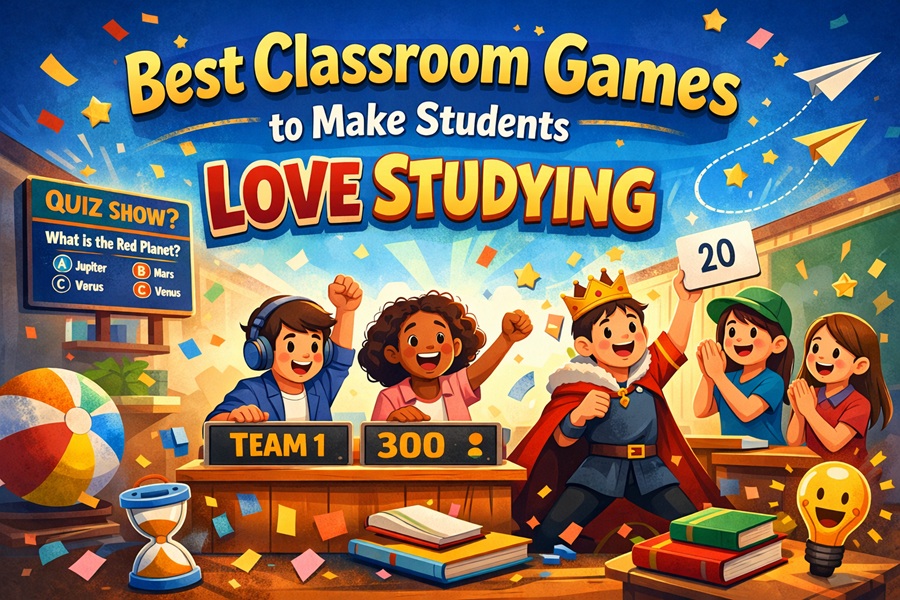
1. Quiz Show Challenge

How it works:
Divide your class into teams and ask questions based on your lesson. Add levels like easy, medium, and hard to build excitement.
Try this:
- “What planet is known as the Red Planet?”
- “Name one gas plant’s need for photosynthesis.”
Let teams quickly discuss and answer. Add a timer if you want to raise the energy.
You can even take inspiration from apps like Qureka Gamez to create fast-paced quiz formats that students already enjoy.
Why students love it:
It feels like a real competition but without pressure. Even quieter students get involved through their team.
2. Think–Pair–Share
How it works:
Ask a question → give thinking time → pair students → then share with the class.
Try this:
“Why do you think the main character made that decision?”
You’ll notice something interesting: students who usually stay quiet start opening up during the pair discussion.
Why it works:
It removes the pressure. Students think first, talk it out, and then share so they feel more confident.
3. Act It Out / Learning Charades
How it works:
Write concepts or terms on slips of paper. One student acts it out, and others guess.
Try this:
- History: Act out “monarchy.”
- Math: Show “addition” using gestures
You’ll instantly see students leaning forward, laughing, and guessing.
Why it works:
Movement and emotion enhance memory. Students remember what they experience, not just what they hear.
4. Flip It (Whiteboard Game)
How it works:
Give students mini whiteboards. Ask a question → they write → everyone flips at once.
Try this:
- “What rhymes with ‘cat’?”
- “What is 12 + 8?”
Flip!
Now you instantly see who gets it and who might need help.
Why it works:
Everyone participates. No waiting. No fear of being singled out.
5. Beach Ball Questions
How it works:
Pass a ball around. Whoever catches it answers a question.
Try this:
- “Name a country in Asia.”
- “Give a synonym for ‘happy’”
Simple, right? But very effective.
Why it works:
Movement changes energy. Students stay alert because they might be next.
6. Pass the Ball
How it works:
Play music while students pass a ball back and forth. When the music stops… the student holding it answers.
Try this:
- “Say a word starting with ‘S’”
- “What is 5 × 6?”
Why it works:
That element of surprise keeps everyone engaged and thinking.
Final Thoughts
Classroom games aren’t a distraction; they’re a powerful shift in how learning happens.
When students are engaged, curious, and enjoying the process, learning no longer feels forced. It becomes effortless, natural, and far more effective.
And when that same energy extends beyond the classroom through platforms like Qureka Gamez, students continue learning without even realizing it.
Because the truth is simple: when learning feels fun, students show up, stay engaged, and remember more.
And that’s where meaningful, lasting learning truly begins.