

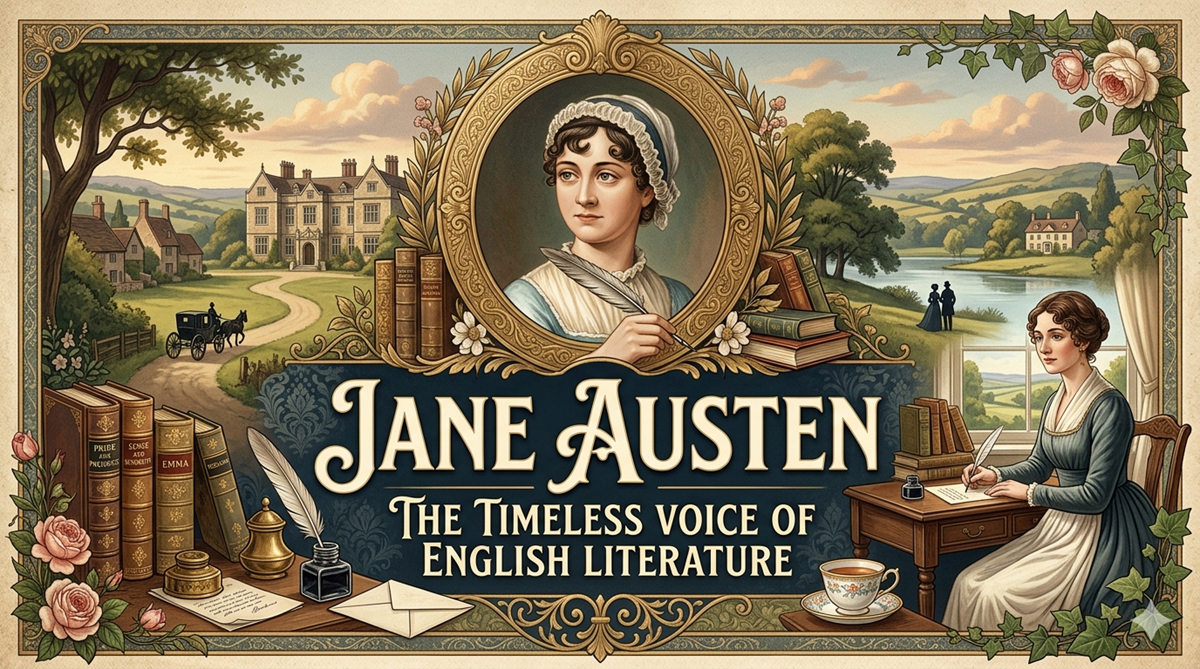
Jane Austen, a brilliant English novelist, has left an indelible mark on world literature with her sharp observations, vivid characters, and timeless storytelling. Born on December 16, 1775, in the quiet village of Steventon, Hampshire, Austen grew up in a world governed by social conventions and family expectations.
Despite the limitations placed on women in the late 18th century, she crafted novels that explored love, class, and society with remarkable wit and insight. Today, her works continue to enchant readers, proving that Austen’s genius transcends time and culture. For literature lovers, Jane Austen remains a symbol of intelligence, humour, and literary elegance.
Early Life and Background
Jane Austen was the seventh child in a lively and close-knit family. Her father, George Austen, was a clergyman who valued education and encouraged all his children to read and write.
Growing up in such an intellectually stimulating household, Jane developed a love for literature at a young age. She attended several schools but spent much of her education at home, reading extensively and honing her writing skills.
The playful family environment, combined with her exposure to novels and contemporary literature, provided Jane with the perfect foundation for her future career. By her teenage years, she had already begun composing stories, poems, and short plays that showcased her wit, keen observation, and natural storytelling ability.
Major Works
Jane Austen’s literary career may have been relatively short, but her impact is monumental. Her first major novel, Sense and Sensibility (1811), explored the contrasting personalities of the Dashwood sisters and blended romance with social critique.
Pride and Prejudice (1813), arguably her most famous work, presents the spirited Elizabeth Bennet and the proud Mr Darcy, weaving themes of love, class, and personal growth in a narrative full of humour and irony. Mansfield Park (1814) delves into morality, social hierarchy, and the challenges faced by women in restrictive environments.
Emma (1815) highlights the adventures and misadventures of a clever, independent young woman navigating social expectations, while Northanger Abbey and Persuasion, both published posthumously in 1817, showcase Austen’s skill in combining satire with romance. Each novel reflects her understanding of human nature, societal pressures, and the subtleties of relationships.
Writing Style and Themes
What sets Jane Austen apart is her unique blend of realism, wit, and social commentary. Her novels often centre on women navigating societal expectations, marriage prospects, and family dynamics. Through irony, humour, and precise dialogue, Austen unveils the complexities of human behaviour and the subtle constraints of social class.
She created strong, intelligent, and relatable female protagonists, offering readers insights into both personal and societal challenges. Themes such as love, morality, independence, and social mobility recur throughout her works, resonating even with modern audiences.
Austen’s writing style is clean, insightful, and often gently humorous, making her novels accessible and enjoyable while also providing a thoughtful critique of her society.
Impact and Legacy
Despite living in an era when women writers were often undervalued, Jane Austen achieved enduring literary acclaim. Her novels have influenced countless authors and remain widely read worldwide.
Beyond the page, Austen’s stories have inspired numerous adaptations, including films, television series, and modern retellings, underscoring their universal appeal. Her keen insights into human nature, combined with her clever use of irony and character development, ensure that her work continues to captivate both casual readers and literary scholars alike.
Jane Austen’s legacy is not just that of a celebrated novelist but also of a keen observer of society whose voice continues to inspire, entertain, and challenge readers centuries after her death.
Conclusion

Jane Austen’s life and work demonstrate the power of observation, intellect, and creativity. Through her novels, she painted a vivid picture of English society, bringing ordinary characters to life with extraordinary insight. Her timeless stories of love, morality, and social awareness remain as engaging today as they were over two centuries ago.
For readers exploring literature, Qureka Gamez offers a unique way to discover authors like Austen through interactive quizzes and games that make learning fun and exciting. By playing and testing your knowledge, you can dive deeper into the fascinating world of classic literature while enjoying a fun, engaging experience.
As her novels continue to inspire adaptations, discussions, and new generations of readers, Austen’s genius remains a shining example of literary brilliance that transcends time.