

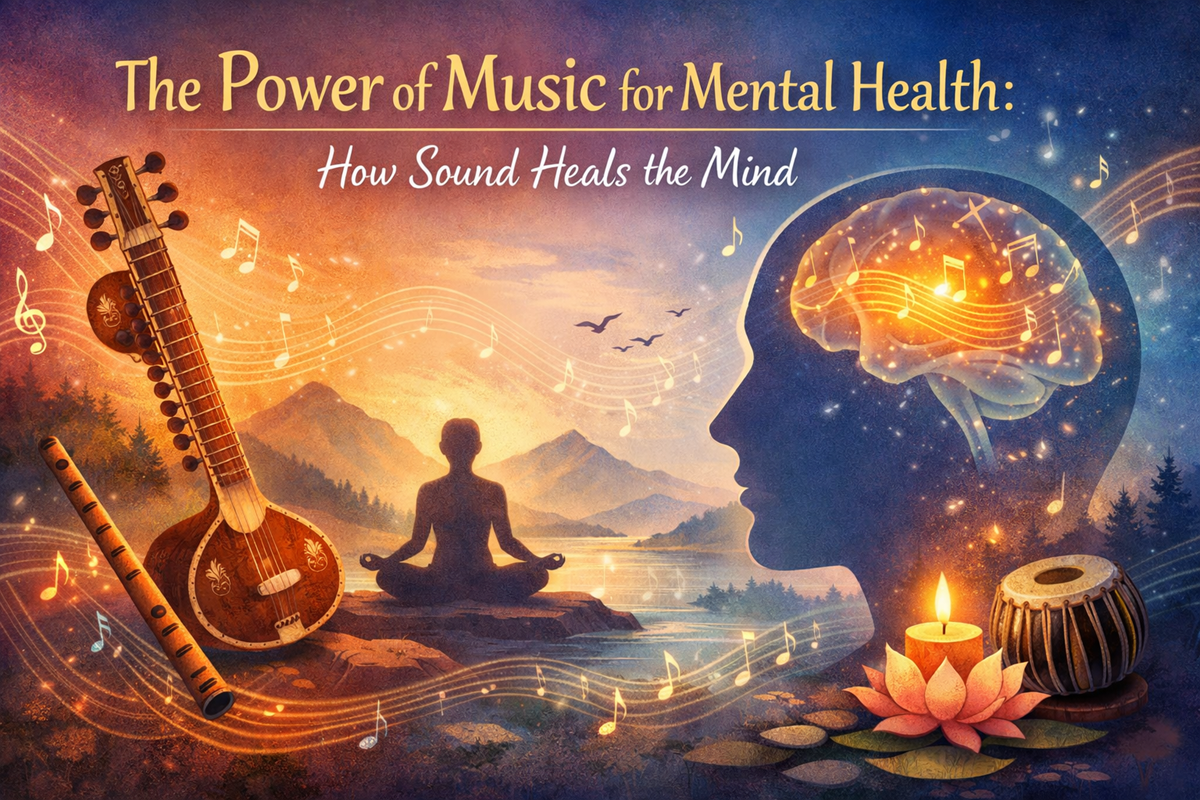
Music is not just something we hear, it’s something we feel. In moments of stress, anxiety, or emotional overwhelm, music often becomes a quiet escape. From soothing instrumental tracks to the depth of Indian classical raagas played on sitar and flute, sound has a powerful ability to influence our mental and emotional state.
How Music Affects the Mind and Emotions?
Music has a direct impact on both the brain and body. It influences important chemicals such as dopamine, which enhances mood, and cortisol, which regulates stress. This is why the right kind of music can instantly shift how you feel.
In Indian classical music, certain raagas are known for their emotional and psychological effects. For instance, Raag Yaman, often performed by legends like Ravi Shankar, creates a sense of calm and inner balance, especially in the evening.
Similarly, morning raagas like Bhairav, beautifully expressed through the flute by Hariprasad Chaurasia, help cultivate focus and mental clarity.
Instrumental music, without the distraction of lyrics, allows the mind to slow down and engage more deeply with emotions, making it especially effective for relaxation and mindfulness.
How Music Reduces Stress and Builds Emotional Balance?
One of the most powerful benefits of music is its ability to reduce stress and restore emotional balance. When the mind feels overwhelmed, gentle and structured sound patterns can help regulate thoughts and bring a sense of stability.
Raag Darbari Kanada, known for its deep and serious tone, is often used to ease anxiety. Artists like Amjad Ali Khan have brought out their calming depth in a way that resonates deeply with listeners. On the other hand, Raag Bageshree is known to reduce restlessness and quiet an overactive mind.
Music also plays an important role in emotional release. Raag Bhairavi, often performed by Bismillah Khan, has a comforting, healing quality, while introspective raagas like Todi help process deeper emotions.
Beyond individual healing, music creates connection. Performances by artists such as Zakir Hussain bring people together, fostering shared emotional experiences and reducing feelings of loneliness.
How Different Music Can Support Specific Mental Health Needs?
Different types of music can support different mental health concerns. While it is not a replacement for medical treatment, it can be a powerful daily support tool.
- For Stress & Anxiety:
Listen to calming raagas like Yaman or Darbari Kanada on flute or sitar to slow down racing thoughts. - For Low Mood or Emotional Fatigue:
Raag Bhairavi or gentle instrumental melodies can uplift emotions and provide comfort. - For Better Sleep:
Soft nighttime raagas like Bageshree, played at a low volume, help relax the mind and improve sleep quality. - For Focus & Concentration:
Morning raagas like Bhairav or light instrumental background music can enhance clarity and attention. - For Emotional Healing:
Deep, expressive raagas like Todi or meditative sitar compositions can support reflection and emotional release.
Even listening for just 10–15 minutes a day can create noticeable improvements in mood and mental clarity.
Conclusion
Music is one of the simplest yet most powerful tools for supporting mental health. Whether it’s a calming raaga or a soft instrumental melody, music helps us relax, process emotions, and reconnect with ourselves.
As maestros like Ravi Shankar have shown, music is not just sound; it is an experience that heals. In a fast-paced world, taking a few moments each day to listen mindfully can bring lasting peace.
And when you’re looking to unwind in a different way, platforms like Qureka Gamez offer fun, interactive quizzes that keep your mind engaged while giving you a light mental break.

Sometimes, a mix of music and mindful entertainment is all you need to reset and recharge.