

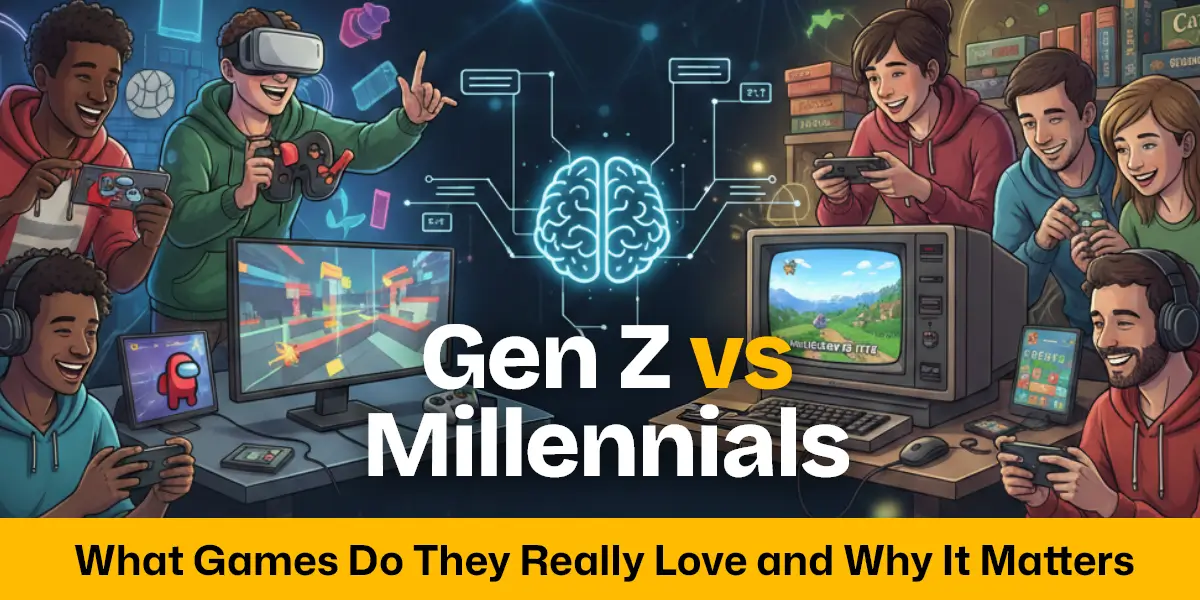
TL, DR
- Gen Z prefers fast, social, mobile-first, and creator-driven games.
- Millennials prefer story-rich, nostalgic, and premium console titles.
- Monetization differs: skins vs full-price campaigns.
- Social interaction is central for Gen Z.
- Emotional storytelling drives Millennials.
Introduction
Are Gen Z players moving away from story-driven titles, or are Millennials simply stuck in nostalgia? Browse through Fortnite highlights on TikTok, and you’ll find Gen Z is constructing worlds in the middle of combat while having conversations with friends. On the other hand, in a Millennial-dominated discussion of The Last of Us, the focus shifts to depth of storytelling, character development, and powerful emotional finales. These are two generations, with two gaming mindsets.
Now, the real question is not who plays more, but it is how and why they play differently. Have games evolved into digital social spaces, or are they still immersive cinematic experiences? Do players now prioritize exclusive skins and live events over a deep, 40-hour storyline? Recognizing this difference is vital for developers, studios, and brands aiming to launch the next big success.
This article exactly covers the doubts that u have in your minds. Let’s dive deep into it to gain better clarity.
How do Gen Z and Millennials play differently?
It has been observed that Gen Z prefers fast, social, mobile-first games with live content updates, while Millennials lean toward immersive, story-driven, and nostalgic experiences.
This shift reflects how each generation grew up with technology, social media, and internet speed. For developers, publishers, and gaming platforms, this generational divide shapes monetization, community building, and platform strategy.
Who are we talking about?
- Millennials: Born roughly between 1981–1996
- Gen Z: Born roughly between 1997–2012
Millennials grew up swapping game CDs, plugging in controllers, and spending weekends on Sony PlayStation consoles or crowded PC LAN sessions with friends. Gaming felt like an event. It required setup, time, and commitment.
Gen Z’s experience looks very different. They grew up with smartphones always within reach, livestreams playing in the background, and creator-driven platforms like TikTok shaping what’s trending in real time.
That difference in how each generation first experienced technology naturally influences the kind of games they enjoy today.
What kind of games does Gen Z actually prefer?
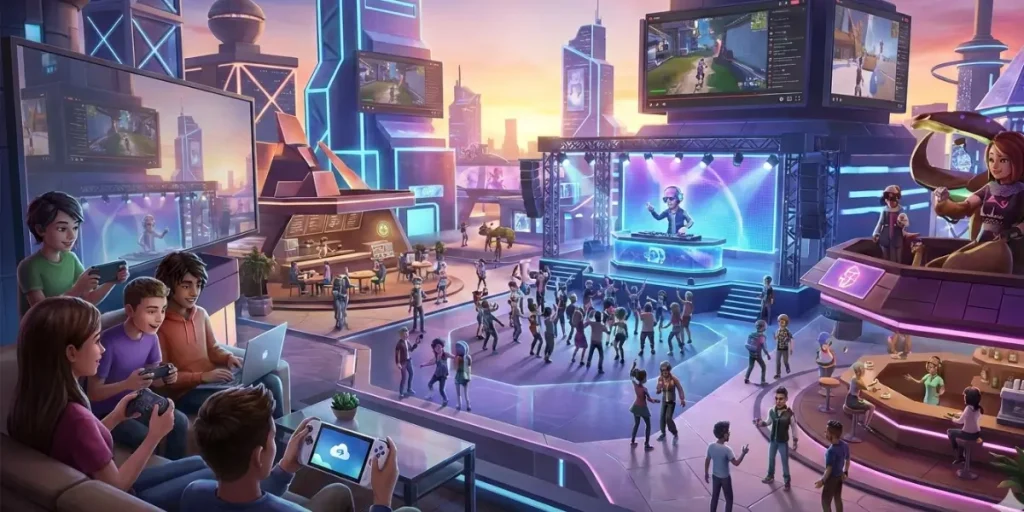
1. Free-to-play competitive games
Games such as Fortnite and Valorant lead Gen Z playtime and engagement. These titles typically offer:
- Fast-paced and action-oriented gameplay
- Skill-based progression and competitive ranking systems
- Socially driven experiences with real-time interaction
- Frequently updated with live events and new content drops
2. Sandbox and creator-driven games
Roblox and Minecraft are massive among Gen Z. These platforms let players build their own worlds, design experiences, and even earn from user-generated content. For many young users, it’s not just about games but about creative ecosystems where imagination and community come together.
These platforms allow:
- User-generated content
- Custom avatars
- Monetization for creators
- Social hangouts
3. Mobile-first experiences
Games like Genshin Impact and PUBG Mobile show how Gen Z blends console-quality gameplay with smartphone convenience.
With 5G access and affordable smartphones, mobile gaming feels native to them.
What kind of games do Millennials prefer?
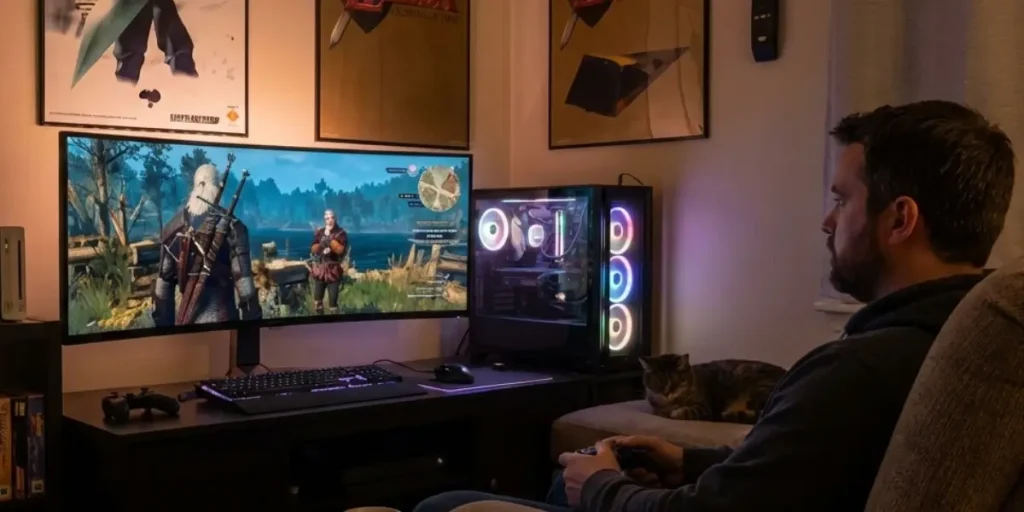
Unlike Gen Z’s preference for fast, socially driven gameplay, Millennials often gravitate toward deeper, more immersive experiences. Many look for strong narratives, detailed worlds, and meaningful progression systems. For them, gaming is less about constant connection and more about storytelling, challenge, and long-form engagement.
1. Story-driven AAA titles
Millennials grew up in the golden era of narrative gaming. Titles like The Last of Us and The Witcher 3: Wild Hunt resonate strongly.
These games focus on:
- Deep storytelling
- Character development
- Emotional arcs
- High production value
Millennials often invest 40–60 hours in a single campaign.
2. Nostalgia-driven franchises
Millennials connect emotionally with franchises like Grand Theft Auto V and World of Warcraft.
Many grew up during the expansion of console and PC gaming. That nostalgia still drives purchasing behavior.
Industry research from the Entertainment Software Association shows that older gamers are more likely to spend on premium titles rather than microtransactions.
3. Console and PC ecosystems
Millennials still value:
- Dedicated consoles
- Physical controllers
- Single-player immersion
- High-performance PCs
Subscription services like Xbox Game Pass appeal strongly to this group.
When and where do they play?
Gen Z usually prefers to play on sources like:
- Plays daily, shorter bursts
- Often on mobile
- Frequently multitasking
Whereas, Millennials prefer:
- Prefer evenings or weekends
- Often on console or PC
- Play in longer sessions
Gen Z blends gaming with streaming culture. Twitch clips, TikTok edits, and esports culture heavily influence their choices. Millennials, on the other hand, are more influenced by detailed reviews, gameplay walkthroughs, and word-of-mouth recommendations.
How should the industry respond?
- Blend social features into narrative games.
- Build creator tools within gaming ecosystems.
- Focus on cross-platform play.
- Balance microtransactions with value perception.
The smartest studios already do both.
For example, Epic Games mixes live events, skins, and storytelling inside Fortnite. That hybrid model bridges generations.
Final Thoughts
As gaming evolves, one clear trend is the convergence of both generations: lightweight, knowledge-driven interactive formats. While Gen Z prefers quick competitive bursts, Millennials lean toward immersive depth, yet both are increasingly engaging with short-form mobile experiences. This shift has fueled the rise of quiz-based and H5 gaming that delivers meaningful engagement in small doses.
Platforms like Qureka Gamez reflect this change. Instead of passive scrolling, users take part in fast, knowledge-focused challenges that sharpen recall and boost mental agility. In a mobile-first market like India, it offers a practical way to turn everyday screen time into something more purposeful and engaging.