

Key Summary
- Trivia games with friends trigger dopamine, the brain’s feel-good reward chemical
- Playing in groups creates shared experiences that genuinely strengthen social bonds
- Friendly competition through multiplayer quiz games keeps everyone engaged and coming back
- Online trivia has made it easier than ever to play with friends, regardless of distance
- Trivia games are also proven to benefit your brain, improving memory, recall, and cognitive speed
- Platforms like QurekaGamez bring all these social and competitive elements together in one place
There’s Something About Trivia Night
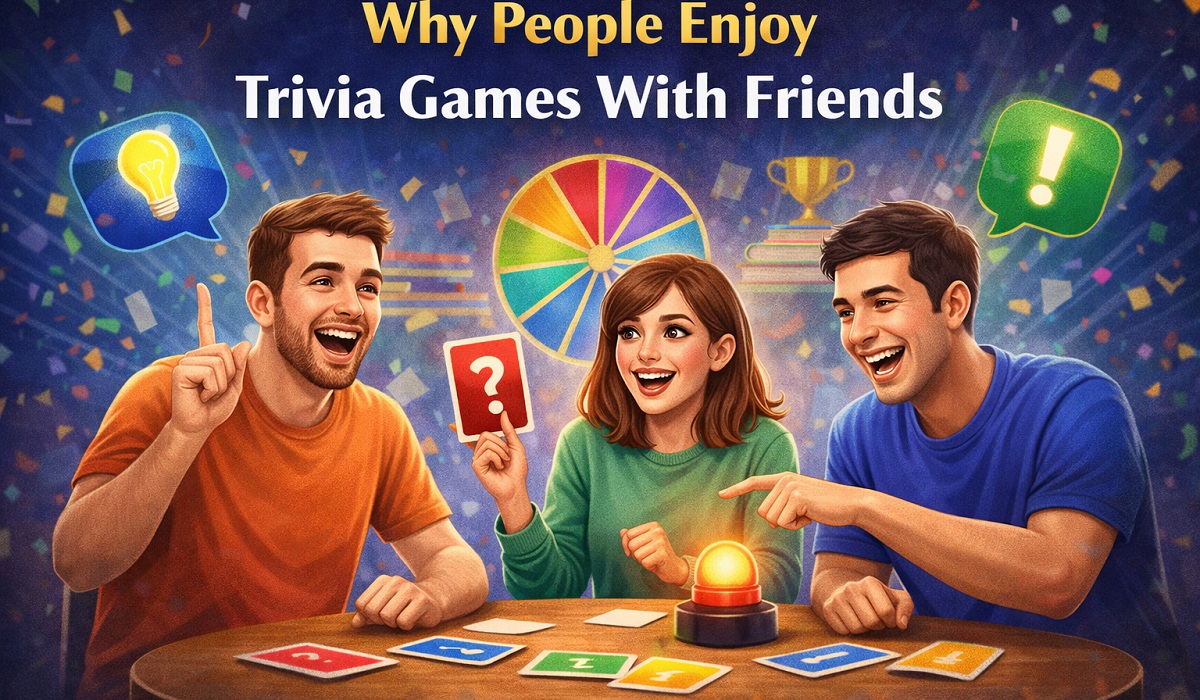
There’s something magical about a room full of friends arguing over a trivia answer, and it’s not just the fun of being right.
Trivia games with friends are among the oldest and most universal social activities on Earth. And in 2026, online trivia has taken this experience to a completely new scale, connecting players across cities, countries, and time zones in real time. But whether you’re huddled around a table or competing through an app, the reason trivia feels so good is rooted in genuine brain science.
Here’s exactly why trivia games with friends are so enjoyable and why that enjoyment is backed by real psychology.
The Brain Science Behind Why Trivia Feels So Good
The Dopamine Hit of Getting It Right
Every time you answer a trivia question correctly, something very specific happens in your brain. When you answer a question correctly, your brain releases dopamine, a neurotransmitter associated with pleasure, reward, and motivation.
A 2018 study in Cognitive, Affective & Behavioral Neuroscience found that knowledge-based rewards activate the same neural circuits as food, music, and social praise.
But here’s what makes trivia especially addictive. What makes trivia special is the unpredictability; you never know if you’ll get the next question right, creating what psychologists call “intermittent reinforcement” the same principle that makes games and social media so engaging.
In simple terms, your brain is hooked before the answer even arrives.
The Social Esteem Factor
Trivia also satisfies something deeper than mere knowledge. Displaying knowledge has been a status marker throughout human history. When we demonstrate expertise in trivia, we gain social prestige among our peers, which aligns with evolutionary psychology, which holds that showcasing knowledge historically signalled genetic fitness and resource-gathering abilities.
Getting a tough question right in front of your friends isn’t just satisfying; it’s instinctively rewarding, a trait that goes back thousands of years.
Trivia Games Bring People Together
Ask anyone about their best trivia night memory, and they will remember the moment, the people, and the laughter, not just the score.
Team-based trivia encourages collaboration, creating bonds through collective problem-solving and celebration of shared knowledge. When you’re working together on a tough question, something shifts — strangers become teammates, teammates become friends.
Winning stimulates production of the happy hormones dopamine, serotonin, and oxytocin, also known as the love hormone, which helps promote empathy, trust, and bonding in relationships. This is why trivia night with friends feels so different from playing alone. The shared highs and lows of a group game create emotional memories that genuinely bring people closer.
The Competitive Edge of Trivia Games
Humans are naturally competitive. We are hardwired to measure ourselves against others, and trivia gives us the perfect low-stakes arena to do exactly that.

Multiplayer quiz games tap into this instinct brilliantly. Leaderboards, head-to-head formats, and timed challenges turn a simple quiz into a genuinely thrilling competition. The friendly rivalry between players creates memorable moments, the dramatic last-second answer, the upset win, the groan-inducing near miss that becomes the inside jokes and shared stories that define friendships.
Platforms like QurekaGamez are built precisely around this dynamic, combining live leaderboards, competitive formats, and social sharing to amplify every competitive moment.
Online Trivia: Play With Friends Anywhere
One of the biggest shifts in trivia gaming over the last decade is the move online. And it has changed everything.
Online trivia games create an opportunity for social interaction without the inconveniences of meeting in person. Players can answer questions from the comfort of their own home, at work, during their commute, or virtually anywhere.
Real-time multiplayer formats now recreate the energy of an in-person trivia night almost perfectly. Online trivia games have created global communities of like-minded individuals who share a love for knowledge and competition, with players forming friendships, creating trivia leagues, and even organising in-person meetups.
The game starts online. The friendships become real.
Trivia is Actually Good for Your Brain
Here’s the part most people don’t realise: playing trivia with friends isn’t just fun. It’s genuinely beneficial for your brain.
Research in Neuroscience Letters showed that adults who engaged in varied cognitive games, such as trivia, displayed faster task-switching and improved working memory over time.
As psychologist Deborah Stokes explains, retaining information about things we’re interested in can be like exercise for the frontal cortex as we age. Studies have shown that brain exercises can improve memory, executive functions, and processing speeds.
Unlike doomscrolling or binge-watching, trivia games with friends are actively building something. Every session makes you sharper, faster, and more knowledgeable, and that compound effect builds over time.
People Also Ask
Q: Why are trivia games so fun to play with friends?
Trivia combines dopamine-driven rewards, social bonding, friendly competition, and shared laughter in one experience, making it one of the most naturally enjoyable group activities available.
Q: What makes multiplayer quiz games more enjoyable than solo games?
The social elements, collaboration, competition, shared wins, and losses trigger oxytocin, serotonin, and dopamine, creating a richer emotional experience than solo play.
Q: Are there brain benefits to playing trivia games?
Yes, regular trivia play improves memory, recall speed, working memory, and cognitive flexibility, backed by multiple peer-reviewed studies.
Q: What are the best online trivia games to play with friends?
Platforms like QurekaGamez offer real-time multiplayer trivia with live leaderboards, making them ideal for competitive group play, whether online or in person.
Q: How do trivia games help build friendships?
Shared experiences, collaborative problem-solving, and the emotional highs of winning together all trigger oxytocin, the bonding hormone, which actively strengthens social connections.
Conclusion
Trivia games with friends are not just a way to pass time; they are one of the most scientifically rich social experiences you can have. Dopamine, oxytocin, social bonding, friendly competition, and brain health benefits are all packed into one game.
Whether you’re at a trivia night, competing on a multiplayer quiz platform, or challenging friends on QurekaGamez, the joy you feel is real, the science is solid, and the friendships you build along the way are the best prize of all