

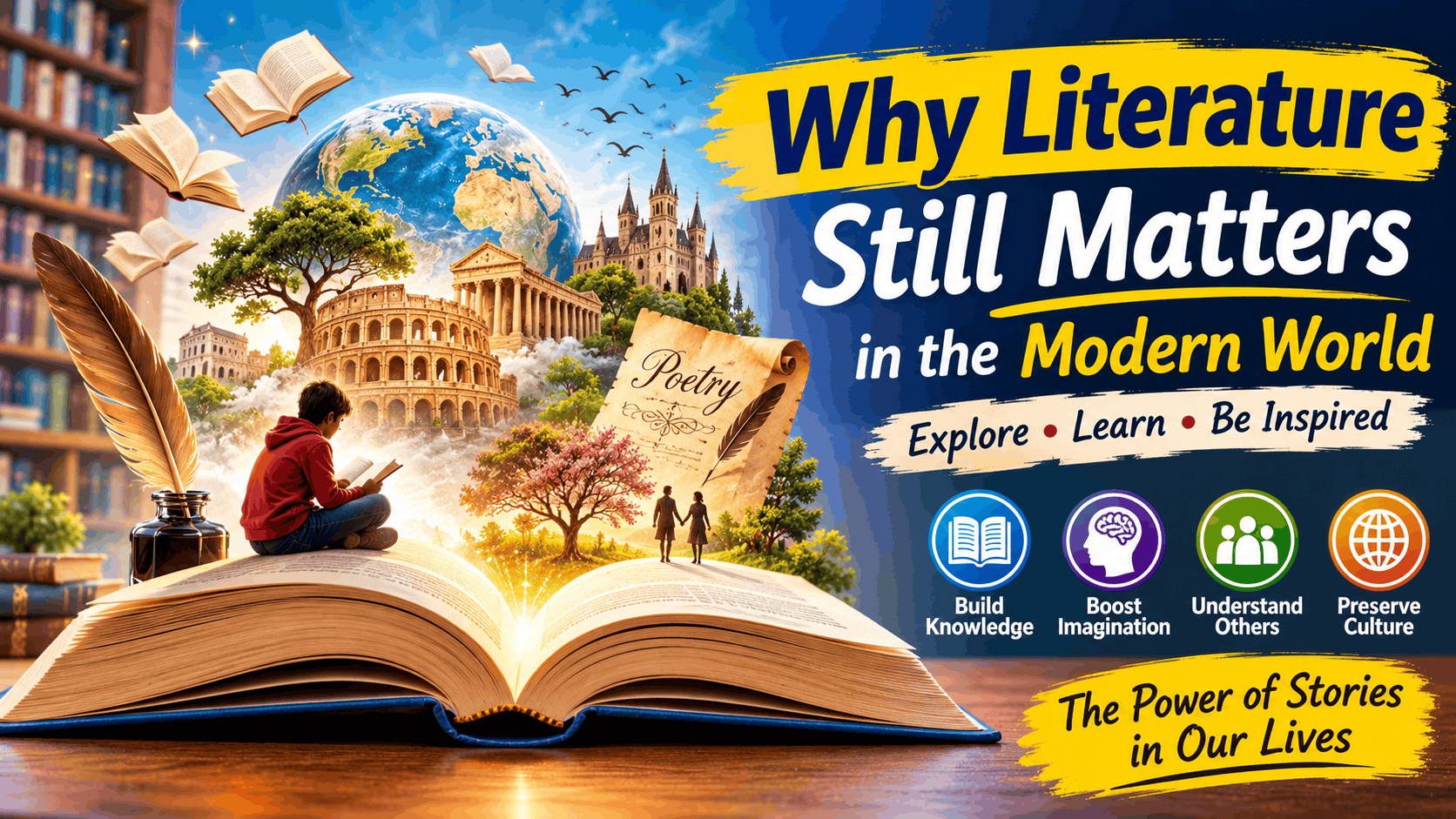
In a world dominated by smartphones, social media and digital entertainment, literature continues to hold an important place in human life. From classic novels and poetry to modern fiction and short stories, literature allows people to explore different perspectives, understand emotions and connect with experiences beyond their own.
Literature is more than a form of entertainment. It reflects society, preserves cultural traditions and provides valuable insights into human behaviour. Although reading habits have changed with the growth of digital platforms, the importance of literature remains relevant across generations.
1. Literature Helps Us Understand Human Emotions
One of the greatest strengths of literature is its ability to explore human emotions. Stories often present experiences involving love, friendship, ambition, fear, loss and personal struggles.
By following the journeys of fictional characters, readers can understand situations they may never have experienced personally. This helps develop empathy and emotional awareness.
For example, a novel about family relationships may encourage readers to think differently about their own relationships. Similarly, stories about courage and determination can inspire individuals to face difficult situations.
Literature therefore provides an opportunity to understand both ourselves and the people around us.
2. Literature Preserves Culture and History
Books, poems, plays and traditional stories serve as important records of cultural identity. They preserve the language, customs, beliefs and experiences of different communities.
Many literary works also reflect the political and social conditions of the periods in which they were written. Through these writings, readers can understand how societies evolved and how people responded to historical events.
Indian literature, for instance, includes a rich collection of classical texts, regional stories, poetry and contemporary novels. Works from different languages offer insights into India’s diverse traditions and social experiences.
In this way, literature connects present generations with their cultural and historical roots.
3. Literature Develops Critical Thinking and Imagination
Reading literature encourages people to think beyond straightforward information. Unlike content that simply presents facts, literary works often introduce complex characters, conflicting ideas and situations that require interpretation.
Readers may question a character’s decisions, examine the motivations behind certain actions or consider alternative endings.
This process strengthens analytical thinking and encourages independent opinions.
Fiction also stimulates imagination by allowing readers to visualise unfamiliar places, historical periods and fictional worlds. These experiences can improve creativity and encourage curiosity.
4. The Role of Literature in Education

Literature has traditionally been an important part of education because it supports language development, communication and comprehension.
Reading different literary styles exposes students to new vocabulary, sentence structures and writing techniques. It also helps them understand how language can communicate ideas and emotions effectively.
Furthermore, discussing novels, poems and plays encourages students to express their opinions, support arguments and consider different viewpoints.
Literature can also introduce important social themes, including equality, justice, identity and freedom. As a result, it contributes to intellectual development beyond academic knowledge.
5. How Digital Technology Is Changing Reading Habits
The way people access literature has changed significantly with the development of digital technology.
Today, readers can access books through e-books, online libraries, digital publishing platforms and audiobooks. These formats make literature more accessible, particularly for people who prefer reading on smartphones, tablets or dedicated e-readers.
Digital platforms have also created opportunities for independent authors to publish their work and reach international audiences.
However, the availability of constant digital entertainment has introduced new challenges. Short-form content and frequent notifications can make it difficult for some readers to maintain concentration during longer reading sessions.
Nevertheless, technology does not have to replace traditional reading. Instead, digital platforms can complement printed books and help introduce literature to new audiences.
6. Literature Encourages Social Awareness and Change
Literary works have often played an important role in encouraging discussions about social issues.
Authors use storytelling to explore subjects such as discrimination, poverty, gender inequality, human rights and social justice. By presenting these issues through characters and real-life-inspired situations, literature can make complex subjects easier to understand.
Some books also challenge established beliefs and encourage readers to question social practices.
Although literature alone cannot solve social problems, it can influence public thinking, create awareness and encourage meaningful conversations.
7. Why Young People Should Develop a Reading Habit
Developing a reading habit at an early age can provide long-term benefits. Literature introduces young readers to different cultures, experiences and ways of thinking.
It also helps improve vocabulary, reading comprehension and communication skills.
Parents and educators can encourage reading by introducing age-appropriate novels, short stories, poetry and illustrated books. Allowing young readers to choose subjects that interest them can also make reading more enjoyable.
Rather than treating reading only as an academic activity, it should be encouraged as a source of discovery, imagination and personal growth.
Conclusion
Literature continues to matter because it connects people through stories, emotions, culture and shared experiences. It helps preserve history, develop critical thinking, improve communication and create awareness about important social issues.
Although technology has transformed the way people read and access books, the value of literature has not disappeared. Instead, new formats have created additional opportunities for readers and writers.
Ultimately, literature reminds us that stories are not simply words printed on pages. They are reflections of human experiences that help us understand the world, appreciate different perspectives and connect with one another.