

TL;DR
Rewards increase motivation in skill-based games by connecting effort with achievement. Research in psychology shows that recognition, performance-based incentives, and visible progress activate dopamine, strengthen habit formation, and improve engagement. When rewards are tied to skill instead of luck, they build trust, confidence, and long-term participation.
Introduction
Have you ever wondered why moving up a leaderboard feels so satisfying?
The answer lies in human psychology.
Understanding how rewards increase motivation in skill-based games means understanding how our brains respond to effort, achievement, and recognition. In competitive quiz platforms and other skill-based gaming environments, rewards don’t just excite players; they reinforce improvement, focus, and consistency.
Let’s break it down simply and practically.
What is Motivation in Skill-Based Games?
In simple terms, motivation in skill-based games is the psychological drive that encourages players to participate, improve, and compete based on ability rather than chance.
To understand things better, there are two main types of motivation:
The first is intrinsic motivation that comes from enjoyment, learning new things, solving problems, or competing.
Second, we have extrinsic motivation, which comes from external rewards such as rankings, prizes, badges, or recognition.
According to Self-Determination Theory (Deci & Ryan), rewards strengthen motivation when they recognize competence rather than control behavior.
When players feel their skill determines the outcome, motivation increases naturally.
How do Rewards Affect the Brain?
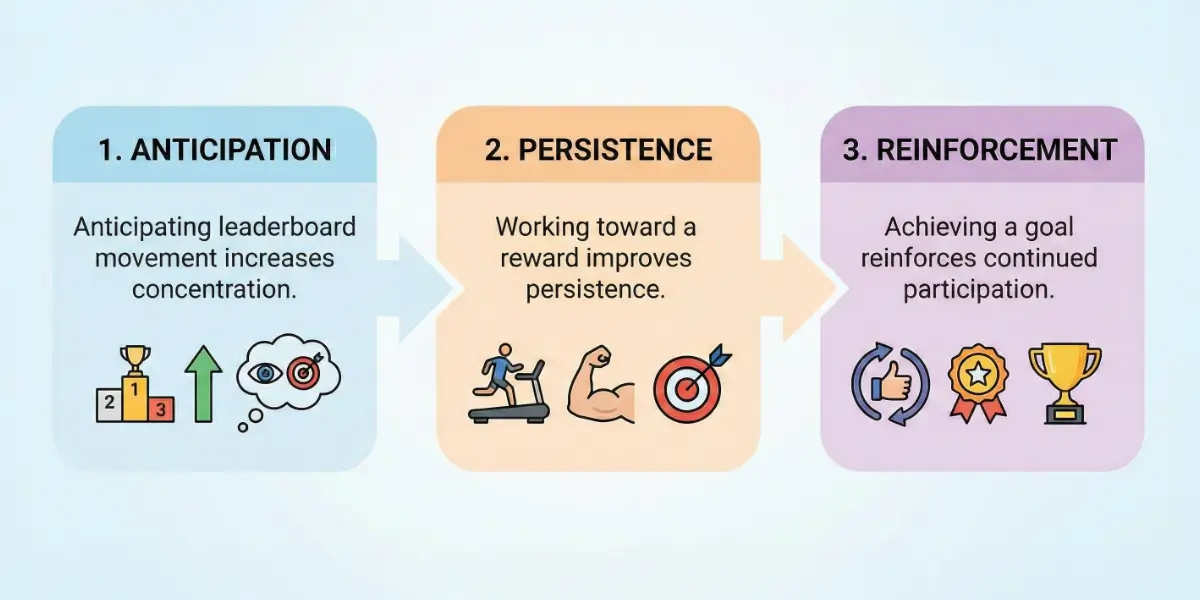
Rewards activate the brain’s dopamine system. Dopamine plays a significant role in anticipation, learning, and habit formation.
A Stanford University study on reward-based learning found that dopamine is released not only when a reward is achieved but also when it is expected. That anticipation increases focus and effort.
In skill-based gaming platforms, it means:
- Anticipating leaderboard movement increases concentration
- Working toward a reward improves persistence
- Achieving a goal reinforces continued participation
The stronger the link between effort and reward, the stronger the motivational effect.
Skill-Based Rewards v/s Luck-Based Wins
Here’s a clear answer:

Skill-based rewards feel more meaningful because they validate effort and ability, while luck-based rewards feel random.
Behavioral research from Duke University shows that people value outcomes more when they believe their actions directly influenced the result.
In competitive quiz environments, it matters a lot.
When players trust that their knowledge and performance determine their ranking, engagement becomes deeper and more sustainable. This is why structured quiz platforms like Qureka Gamez, where leaderboard positions are based purely on accuracy and speed, foster stronger long-term participation than random reward systems.
It indicates that fairness strengthens motivation.
What Types of Rewards Increase Motivation the Most?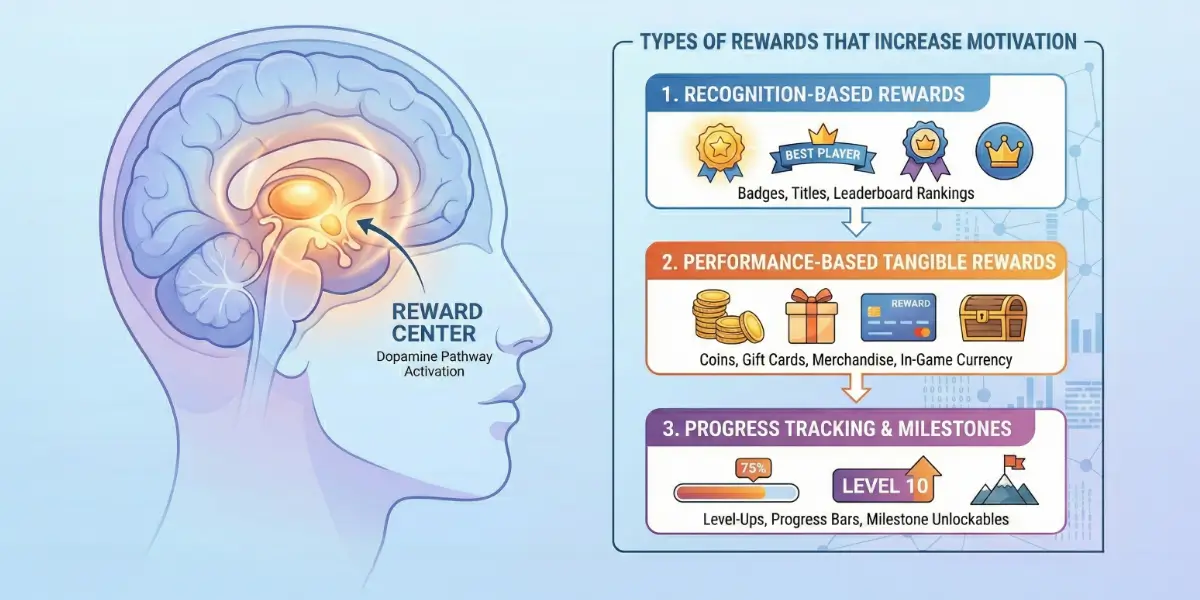
Different types of rewards influence players differently. Let us see, one by one, how different rewards impact the participants.
1. Recognition-Based Rewards
Leaderboards and visible rankings are extremely powerful. According to a University of Colorado study on gamification, visible recognition significantly increased participation in competitive learning environments.
Imagine seeing your name moving upwards. It will trigger the competitive energy, and recognition will become more fruitful.
2. Performance-Based Tangible Rewards
Tangible rewards such as vouchers or prizes increase effort when they are tied directly to measurable skill.
Research in Computers in Human Behavior indicates that reward systems linked to performance lead to stronger long-term engagement compared to participation-only systems.
The key factor is transparency. Players must clearly understand how performance leads to reward.
3. Progress Tracking and Milestones
A Harvard Business School study on the “Progress Principle” found that minor visible improvements boost motivation significantly.
In quiz competitions, progress tracking encourages daily participation, reinforces improvement, and reduces drop-off rates.
Even without large prizes, visible progress motivates players to continue. It gives them the sense of accomplishment that, sooner or later, they will have their reward.
Do Rewards Increase Engagement in Skill-Based Games?
For obvious reasons, yes. But when they are correctly structured.
Reward systems increase engagement by reinforcing effort, setting measurable goals, and linking performance to meaningful outcomes.
Engagement improves when rewards are transparent, skill-based, fairly distributed, and consistently applied.
If rewards feel random or biased, motivation drops quickly. Trust is essential.
Can Rewards Improve Learning and Performance?
Much research suggests they can.
An analysis found that structured reward systems improve task persistence and learning performance when they reinforce competence.
In skill-based quiz games, rewards encourage players to improve knowledge, increase focus, enhance memory recall, and develop strategic thinking.
Because the goal is to perform better, players naturally sharpen their skills.
Are Rewards Necessary for Motivation?
It is not always necessary that rewards are important for motivation. However, they do amplify it. Self-Determination Theory (Deci & Ryan) explains that external rewards do not harm intrinsic motivation when they recognize competence rather than control behavior.
When rewards celebrate skill, they strengthen motivation. When rewards feel manipulative, they weaken trust.
It means that the structure of the reward system makes all the difference.
What Makes a Reward System Fair?
A fair reward system increases trust and long-term engagement.
Fair systems include clear scoring rules, transparent leaderboard calculations, verification processes, equal opportunity guidelines, and anti-cheating safeguards.
This transparency is what separates strong skill-based platforms from casual gaming systems. When players see clear rules and verified rankings as implemented in structured quiz ecosystems like Qureka Gamez, they are more likely to compete consistently and improve performance over time.
Competitive quiz motivation increases naturally when fairness is visible.
People Also Ask
1. How do rewards increase motivation in skill-based games?
Rewards increase motivation by linking performance to meaningful outcomes. When players see that effort directly improves rankings or earns recognition, they are encouraged to participate consistently and improve their skills.
2. Why are skill-based rewards more motivating than luck-based rewards?
Skill-based rewards validate effort and knowledge, while luck-based rewards feel random. When outcomes depend on ability, players experience greater satisfaction and confidence.
3. Do leaderboard systems improve engagement?
Yes. Leaderboards improve engagement by providing visible recognition and competitive comparison, which encourages players to perform better.
4. Can reward systems improve learning?
Yes. Research shows that performance-based rewards increase focus, persistence, and skill development, especially in knowledge-driven environments like quiz platforms.
5. What makes a reward system trustworthy?
A reward system becomes trustworthy when it has transparent rules, fair rankings, proper verification processes, and precise performance criteria.
Final Thoughts
Rewards are powerful because they tap into something deeply human: the desire to achieve and be recognized.
When designed around skill, fairness, and transparency, rewards do more than excite players. They reinforce effort, encourage improvement, and build long-term engagement. Research across psychology and education supports the idea that performance-based reward systems increase focus and persistence when structured correctly.
In true skill-based environments, rewards represent growth, recognition, and earned achievement. Platforms like Qureka Gamez, built around competitive accuracy and transparent leaderboards, demonstrate how properly structured reward systems can transform simple quizzes into meaningful, performance-driven experiences.
When players trust that their effort truly matters, motivation becomes sustainable, and that is the real impact of rewards in competitive quiz gaming.